
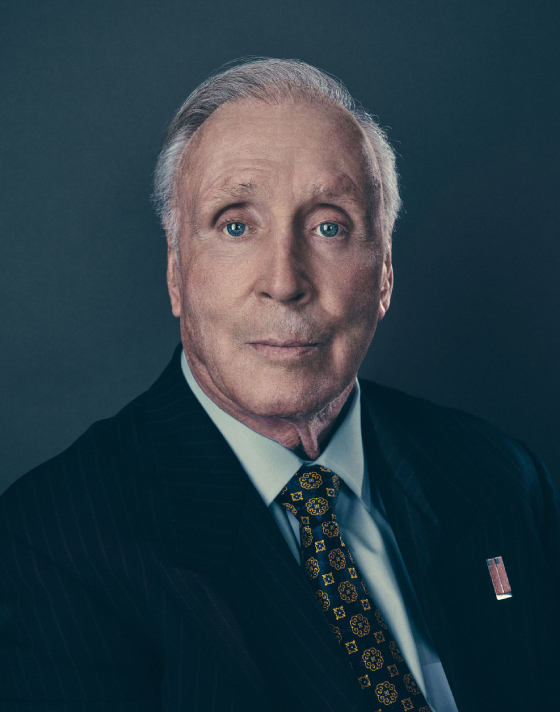
Meet Charles J. Maikish
Leadership is tested when conditions change faster than organizations are prepared to respond.
For more than four decades, Charlie Maikish has led through moments where institutional stability, operational continuity, and human lives depended on disciplined leadership under pressure.
As Director of the World Trade Department for the Port Authority of New York and New Jersey, he directed response and recovery efforts following the 1993 bombing of the World Trade Center, helping restore operations in a matter of weeks. Years later, as Executive Vice President at JPMorgan Chase, he led global crisis management during the September 11 attacks, ensuring the safety and continuity of operations for thousands of employees across Lower Manhattan.
Charlie later returned to Lower Manhattan as Executive Director of the Lower Manhattan Construction Command Center, where he coordinated more than $30 billion in reconstruction and development tied to the rebuilding of one of the world’s most important financial districts.
Across leadership roles at JPMorgan Chase, Citibank, Columbia University, and the Port Authority, Charlie’s work has consistently centered on one challenge: helping complex organizations operate, adapt, and recover when getting it wrong stops being an option.
The Responsibility of Leadership Under Pressure
Crisis reveals the strength of an organization’s preparation, discipline, and ability to act with clarity.
Throughout his career, Charlie has seen that organizations rarely fail from a single event alone. They fail when uncertainty compounds faster than leadership can establish focus, alignment, and forward movement.
That understanding became the foundation for the philosophy behind Manage the Moment, Charlie’s practical leadership framework shaped through his harrowing experiences during periods of extraordinary disruption.
At the center of Charlie’s approach is a disciplined principle: leaders cannot control every outcome during a crisis, but they can control how organizations respond, stabilize, communicate, and restore continuity. By narrowing focus to the next critical decision, leaders create clarity that others can follow even when conditions remain uncertain.
His work today focuses on helping organizations strengthen preparedness during peacetime, improve institutional resilience, and build the operational discipline required to navigate disruption without losing organizational trust, momentum, or direction.


Leadership That Extends Beyond the Crisis
The experiences that shaped Charlie’s leadership philosophy were extraordinary, but the lessons extend far beyond moments of catastrophe.
Modern organizations face increasing operational complexity, accelerated change, institutional pressure, and environments where leaders are often required to make consequential decisions without complete information. Whether navigating crisis, transformation, restructuring, infrastructure challenges, or organizational disruption, the need for disciplined leadership remains the same.
Charlie’s work bridges operational strategy, crisis leadership, organizational survivorship, and restoration. Through speaking engagements, advisory work, mentorship, and Manage the Moment, he helps leaders develop the clarity, preparedness, and resilience necessary to guide organizations through uncertainty while protecting the systems, people, and missions entrusted to them.
The goal is not simply to survive disruption. It is to restore continuity, rebuild confidence, and position organizations to move forward with strength and purpose after the moment has passed.